BOEING 285T0708-4 Aircraft Thrust Reverser Relay Module 767
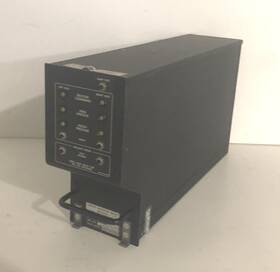
( Brand: Boeing ), ( Manufacturer Part Number: 285T0708-4 ), ( Part Type: Module ), ( Custom Bundle: No ), ( Compatible Model: 767 ), ( Country/region Of Manufacture: United States )
Review BOEING 767 Aircraft Thrust Reverser Relay Module
The Boeing 285T0708-4 767 Aircraft Thrust Reverser Relay Module is a crucial component of the 767 aircraft's thrust reverser system, designed to ensure safe and efficient landing and braking of the aircraft. This relay module is responsible for controlling the hydraulic actuation of the thrust reversers, which are essential for reducing the stopping distance and preventing skids during landing.
The Boeing 285T0708-4 Thrust Reverser Relay Module is a solid-state, power-operated device, featuring eight normally open contacts and eight normally closed contacts. The module is designed to operate in a harsh aircraft environment, with a wide operating temperature range from -40 C to 70 C (-40 F to 158 F), and an operating altitude range up to 41,000 feet.
The module is mounted on a composite bracket that is attached to the thrust reverser actuator. It is designed to be fail-safe, meaning that if the power supply is lost, the contacts will return to their default position, ensuring that the thrust reversers are in their safe position.
The Boeing 285T0708-4 Thrust Reverser Relay Module is tested extensively to meet the rigorous standards of the aerospace industry. It undergoes functional testing, environmental testing, and electrical testing to ensure that it functions reliably and consistently.
The module is designed for easy replacement, with quick disconnect terminals that allow for easy wiring connections. It comes with a comprehensive instruction manual and troubleshooting guide, making it easy for maintenance personnel to diagnose and repair any issues.
In summary, the Boeing 285T0708-4 767 Aircraft Thrust Reverser Relay Module is a critical component of the 767 aircraft's thrust reverser system. It is a solid-state, power-operated device that features eight normally open contacts and eight normally closed contacts. It is designed to operate in harsh aircraft environments and is tested extensively to meet the rigorous standards of the aerospace industry. It is easy to install and maintain, making it a reliable and essential component of the 767 aircraft.
Buying a Boeing 285T0708-4 767 aircraft thrust reverser relay module involves considering several pros and cons. This component is an essential part of the aircraft's thrust reversal system, which helps the plane slow down or stop during landing. Let's examine some potential advantages and disadvantages of purchasing this relay module.
Pros:1. Enhanced Safety: A functioning thrust reverser system is crucial for safe landings. A new relay module ensures the system operates effectively, reducing the risk of accidents due to inadequate braking or uncontrolled deceleration.
2. Improved Engine Performance: A well-maintained thrust reverser system contributes to better engine performance by ensuring the engines are not damaged during landing.
3. Compliance with Regulations: Regulatory bodies require airlines to maintain their aircraft in good working order. Replacing old or faulty relay modules is a necessary investment to ensure regulatory compliance.
4. Cost-Effective in the Long Run: Although the upfront cost can be high, the potential consequences of a malfunctioning relay module, such as engine damage or safety incidents, can result in much greater expenses.
Cons:1. High Upfront Cost: The cost of purchasing a new Boeing 285T0708-4 767 aircraft thrust reverser relay module can be substantial, making it a significant investment for airlines.
2. Downtime: Removing the old relay module and installing a new one requires time and resources, which can lead to aircraft being out of service for an extended period.
3. Complexity: The installation process can be complex, requiring specialized knowledge and tools. Outsourcing the installation to a maintenance provider can add to the overall cost.
Conclusion:The decision to buy a new Boeing 285T0708-4 767 aircraft thrust reverser relay module involves weighing the potential benefits, such as safety, improved engine performance, and regulatory compliance, against the costs, such as the high upfront investment and downtime. Considering the potential risks and expenses associated with a faulty relay module, it is generally a wise investment for airlines to maintain their aircraft with new, functional components.
Recommendation:It is recommended that airlines prioritize the replacement of old or faulty relay modules to ensure the safety and efficiency of their fleet. Scheduling regular maintenance and investing in new components when necessary can help minimize the risks associated with a malfunctioning thrust reverser system. Additionally, outsourcing the installation to a trusted maintenance provider can help streamline the process and reduce downtime.
Details:
This is a thrust reverser relay module used on Boeing commercial aircraft. Boeing 767 Aircraft Thrust Reverser Relay Module 285T0708-4. The data tag is pictured in the final image. It is in good condition without damage to the housing or connectors.
Unfortunately it is not tagged and I have no way to test so being listed AS IS. This one was removed from JA8273 during tear down and has been in storage since.
part #: 285t07084 price
- $200.00
specifications avionicavioni:
- brand: Boeing
- mpn: 285t0708-4
- part type: Module
- custom bundle: No
- compatible model: 767
- country/region of manufacture: United States
shipping avionicavioni:
- carrier: UPS
- cost: $48.17
- type: Calculated
- transit: 4-8 Days
- service: UPS Ground
- class: Standard
seller avionicavioni:
- city: Cleveland, Tennessee
- rating: 100.0%
- # reviews: 14805
returns avionicavioni:
- policy: No Returns
general avionicavioni:
- condition: Used
- Aviation Parts Accessories > Avionics > Other Avionics
offer avionicavioni:
- availability: In Stock
- started: April 13, 2025
- quantity: 1
- options: Ship-to-home
- sold: 0
payments avionicavioni:
- other
- wallet: Google-pay
- credit card: Mastercard
Boeing 285T0708-4 Is Similar To:
- 10-60717-36 Boeing Aircraft Annuniciator Generator (40.4% similar) Airworthiness is only determined by the FAA approved mechanic or certified repair station. This item is untested and sold as. Any is for the sole purpose of identifying an item...(July 23rd, 2017)
- 10-60747-3 Astek Boeing Aircraft Overspeed (45.5% similar) The data tag reads overspend limit sensor, Boeing no. Boeing aircraft overspend limit sensor this is an used in and possibly other types as well. It is in very good condition without damage to the housing or mounts. B0704-10004, aster instrument corp. Thanks again. This one has a serviceable tag ...(March 23rd, 2017)
- 109500-100 Dmc Aircraft Cockpit Data Printer For Boeing (38.6% similar) All of my photos were taken by me and not from the internet. I m selling as-is untested. See photos for actual condition of item. Purchased this item at local aviation offer. Ask before buying...(March 23rd, 2018)
- 109500-105 Dmc Boeing Aircraft Cockpit (35.1% similar) This one was removed during tear down and has been in storage since. FAA-Pam certified eligible on Boeing 727, 737, 747, 757, 767. It is in very good condition without damage to the housing or connectors. Another offer from aircraft stock, inc. Thanks again. Boeing aircraft cockpit data printer P/N ...(October 2nd, 2017)
- Boeing Electronics 1156518-150 Box 747 Overhead Aircraft (38.3% similar) The mounts are also undamaged and the data tag reads Hughes overcome, overhead electronics box, hair part no. Another offer from aircraft stock, inc, rev. It is not tagged and I have no way to test it so it is being listed as is. It is in very good condition without damage to the housing or ...(March 11th, 2015)
- 130502-6 Airesearch Boeing Aircraft Cabin Control Panel (36.8% similar) The data tag reads selector, cabin press. Part series 2, research. Boeing 757, 767 aircraft cabin control panel P/N this is a pressure used in 757. Thanks again. Another offer from aircraft stock, inc. The controls are in place and move easily. It is in good condition without damage to the housing ...(May 7th, 2018)
- 13371205-1 Boeing Aircraft Cockpit Breaker Panel (44.9% similar) Another offer from aircraft stock, inc. Thanks again. It has been in storage since and is good condition. The panel is not cut or cracked but has some scratches and scuffs from loose storage. Boeing 767 aircraft cockpit breaker panel this is a removed from commercial during tear down. Measures x 10 ...(June 28th, 2018)
- 13371429-1 Boeing Aircraft Breaker Control Panel (43% similar) Unfortunately it is not tagged and I have no way to test so being listed as. This one was removed during tear down and has been in storage since. It is in very good condition without damage to the housing or connectors. Boeing 757, 767 aircraft breaker control panel P/N this is a circuit for 757 or ...(May 5th, 2018)
- 13371470-1 Boeing Aircraft Breaker Control Panel (43% similar) Another offer from aircraft stock, inc. Thanks again. Boeing 757, 767 aircraft breaker control panel P/N this is a circuit for 757 or commercial. It is in very good condition without damage to the housing or connectors. This one was removed during tear down and has been in storage since. ...(April 22nd, 2018)
- 15830m Aro Boeing Aircraft Oxygen (39.1% similar) This one was removed during tear down and has been in storage since. It is not tagged and I have no way to test so being listed as. It is in good condition without damage to the housing or connectors. Thanks again. Boeing aircraft oxygen regulator control panel P/N 15830M this is an used on 73 nd ...(December 7th, 2017)
- 182936 Weston Boeing 737 Aircraft (39.1% similar) No paperwork, sold as parts only. Boeing 737 aircraft oxygen pressure gauge for P5-14 overhead panel as removed. P5-14 panel not included, pictured for reference only...(February 3rd, 2018)
