BOEING Shaft 737-727 697828
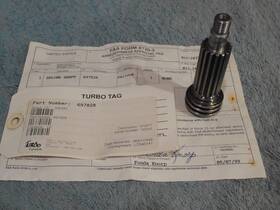
( Brand: Boeing ), ( Manufacturer Part Number: 697828 ), ( Part Type: Shaft ), ( Compatible Make: Avionics ), ( Compatible Model: 737 )
Review BOEING Shaft P#697828- Faa Form
The Boeing 737-700 series aircraft, including part number 697828, is known for its efficiency and reliability in short- to medium-range flights. The 737-727 shaft, specifically part number 697828, is a crucial component of the engine system in these aircraft.
This shaft is a hollow, cylindrical piece of material, typically made from high-strength alloy steel. It serves as a critical link between the engine's compressor and turbine sections, facilitating the transfer of power from the compressor to the turbine. The shaft's precise dimensions and materials are engineered to withstand the extreme temperatures and pressures generated during flight.
One end of the shaft connects to the compressor via a set of bearings, while the other end connects to the turbine via another set of bearings. The shaft is supported by these bearings, allowing for smooth rotation and minimal wear. The shaft also features keyways and splines for attaching various engine components, ensuring a secure and reliable connection.
The surface of the shaft is often treated with a protective coating, such as nickel or chrome, to resist corrosion and wear. This coating also helps to improve the shaft's heat resistance and durability, ensuring it can withstand the rigors of commercial airline service.
Maintenance of the 737-727 shaft is essential for the continued safe and efficient operation of the aircraft. Regular inspections and maintenance, including checking for signs of wear or damage, ensuring proper lubrication, and replacing the shaft as needed, are critical to ensuring the longevity and reliability of the engine system.
In summary, the Boeing 737-727 shaft, part number 697828, is a vital component of the engine system in the 737-700 series aircraft. Its precise engineering, high-strength materials, and protective coatings enable it to withstand the extreme conditions of commercial airline service, while its secure connections and bearings ensure smooth rotation and minimal wear. Regular maintenance is essential to ensure the continued safe and efficient operation of the aircraft.
buying a Boeing 737-700 shaft (part number 69-7828) is a significant investment for any aviation maintenance organization. Here are some potential pros and cons to consider before making a purchase:
Pros:1. OEM Compatibility: Purchasing a new or refurbished shaft from Boeing ensures that it is designed and manufactured to meet the exact specifications of the Boeing 737-700 aircraft. This can help reduce the risk of compatibility issues and potential downtime.
2. Reliability: A new or refurbished shaft can offer improved reliability compared to using an older, worn-out part. This can help reduce maintenance costs and improve operational efficiency.
3. Availability: Having a spare shaft on hand can help minimize downtime in case of a failure. This can be especially important for organizations that operate a large fleet of Boeing 737-700 aircraft.
Cons:1. Cost: The cost of purchasing a new or refurbished shaft can be significant. This may be a limiting factor for smaller organizations or those with tight budgets.
2. Lead Time: Obtaining a new or refurbished shaft from Boeing or an authorized supplier may take some time. This can be a concern for organizations that need to make repairs quickly to minimize downtime.
3. Storage: Storing a spare shaft requires additional space and resources. This can be a consideration for organizations with limited storage capacity.
In conclusion, purchasing a new or refurbished Boeing 737-700 shaft (part number 69-7828) can offer several benefits, including improved reliability, OEM compatibility, and reduced downtime. However, the cost and lead time may be limiting factors for some organizations. Ultimately, the decision to purchase a shaft should be based on an organization's specific needs, budget, and operational requirements.
If an organization determines that purchasing a new or refurbished shaft is the best option, they may consider exploring options from authorized Boeing suppliers or third-party refurbishers to help reduce costs while still ensuring quality and compatibility. Alternatively, organizations may consider implementing a condition-based maintenance program to help extend the life of existing shafts and reduce the need for frequent replacements.
Details:
Untested HAS paper work EXCELLENT CONDITION untested -HAS.
part #: 697828 prices
- $35.00-$129.00
specifications avionicavioni:
- brand: Boeing
- mpn: 697828
- part type: Shaft
- compatible make: Avionics
- compatible model: 737
general avionicavioni:
- condition: Used
- Aviation Parts Accessories > Avionics > Other Avionics
returns avionicavioni:
- policy: No Returns
offer avionicavioni:
- availability: In Stock
- sold: 0
- options: Ship-to-home
- quantity: 1
- started: December 9, 2025
payments avionicavioni:
- other
- wallet: Google-pay
- credit card: Visa
seller avionicavioni:
- city: Fort Lauderdale, Florida
- # reviews: 13943
- rating: 99.6%
shipping avionicavioni:
- cost: $8.90
- type: Fixed
- service: Economy
- transit: 4-10 Days
- class: Economy
Boeing 697828 Is Similar To:
- 1500-0040-017 1500-0030-006 Flight Dynamics Boeing 737 757 Hud Overhead Projector And Combiner With Cable (30.4% similar) Item includes a ups serviceable parts tag dated. This sale includes the attaching power cable that runs from the projector to the combiner includes Stewart industries removal tag this item is in excellent condition and is as is removed from aircraft. Sale also includes flight dynamics overhead ...(February 1st, 2016)
- L000-828111 Aero Controflex Rare Nos Vintage Boeing Faa Lavatory Sink Faucet (20.2% similar) About 40 ounces. I combine shipping...(October 9th, 2018)
- Boeing 699314a 737-727 tub P 699314a With Faa Form (77.4% similar) Untested has paper work excellent condition untested -has...(December 8th, 2025)
- Boeing 886156-4 737-727 screw Assy P 886156-4 With Faa Form (71.3% similar) Untested has paper work excellent condition untested -has...(December 8th, 2025)
- Boeing 737126-1 737-727 housing P 737126-1 With Faa Form (73.2% similar) Untested has paper work excellent condition untested -has...(December 8th, 2025)
- Boeing 2a3236-001 737-727 manifold Assy P 2a3236-001 With Faa Form (65.6% similar) Untested has paper work excellent condition untested -has...(December 8th, 2025)
- Boeing 887412-1 737-727 housing P 887412-1 With Faa Form (73.2% similar) Untested has paper work excellent condition untested -has...(December 9th, 2025)
- Boeing 695854 737-727 guide P 695854 With Faa Form (79.2% similar) Untested has paper work excellent condition untested -has...(December 9th, 2025)
- Boeing 699700 737-727 spring P 699700 With Faa Form (80.4% similar) Untested has paper work excellent condition untested -has...(December 9th, 2025)
- Boeing 6967546a 737-727 shaft P 696756a With Faa Form (86.2% similar) Untested has paper work excellent condition untested -has...(December 9th, 2025)
- Boeing 699545 737-727 shaft P 699545 With Faa Form (84.9% similar) Untested has paper work excellent condition untested -has...(December 9th, 2025)
