BOEING Coupling 737-727 696793
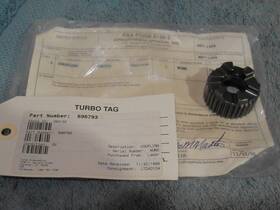
( Brand: Boeing ), ( Manufacturer Part Number: 696793 ), ( Compatible Make: Avionics ), ( Compatible Model: 737 )
Review BOEING Coupling P#696793- Faa Form
Boeing 737-700/-800/-900 Series 727 Coupling (Part No. 696793)
The Boeing 737-700/-800/-900 series 727 coupling, part number 696793, is a critical component designed for use in the fuel system of the popular Boeing 737 narrow-body jet airliners. This coupling is specifically engineered to connect the right and left fuel lines in the wing fuel tanks, ensuring a secure and efficient transfer of fuel between the tanks and to the engine.
Constructed from high-quality materials, this coupling is designed to withstand the rigors of commercial aviation. The body is machined from a single piece of aerospace-grade aluminum alloy, providing superior strength and durability. The coupling features O-ring seals that provide a positive seal, preventing fuel leaks and reducing the risk of in-flight fuel spills.
The 737-700/-800/-900 series 696793 coupling is designed to meet the stringent requirements of the Federal Aviation Administration (FAA) and European Aviation Safety Agency (EASA) regulations. It undergoes rigorous testing to ensure it can perform reliably in various operating conditions, from freezing temperatures at high altitudes to extreme heat on the ground.
This coupling is also designed for ease of maintenance. It features a modular design, allowing for quick and easy replacement of worn or damaged parts without having to replace the entire coupling. The O-ring seals are easily accessible, allowing for regular inspections and replacements as needed.
In summary, the Boeing 737-700/-800/-900 series 727 coupling, part number 696793, is a vital component in the fuel system of the Boeing 737 jet airliner. It is engineered from high-quality materials, designed for durability and reliability, and meets the rigorous regulations of the FAA and EASA. With its modular design, it is also easy to maintain, ensuring that the aircraft can continue to operate safely and efficiently.
Boeing 737-700 Coupling (Part Number 696793): A Comprehensive Analysis
Introduction:The Boeing 737-700 is a popular narrow-body jet airliner. Part number 696793, specifically, refers to a coupling component used in the 737-700's engine pylon. This analysis will discuss the potential pros and cons of purchasing this coupling part.
Pros:1. High Reliability: Boeing is a well-established and reputable aircraft manufacturer. The parts produced by Boeing, including this coupling, are often of high quality and reliability.
2. OEM Compatibility: By purchasing the original equipment manufacturer (OEM) part, you can ensure that it is a perfect fit for your Boeing 737-700 aircraft, reducing the risk of compatibility issues.
3. Long-Term Savings: Although the initial cost of OEM parts may be higher, they often provide better value in the long run due to their durability and reliability.
4. Improved Safety: Using OEM parts ensures that your aircraft maintains its original safety standards, thereby reducing the risk of potential accidents.
Cons:1. Higher Initial Cost: OEM parts, such as the Boeing 737-700 coupling (Part Number 696793), typically come with a higher price tag compared to aftermarket parts.
2. Potential Availability Issues: Depending on the demand for the part and the specific availability at Boeing, there may be a delay in receiving the part, which could impact your aircraft's operational readiness.
3. Limited Negotiation: Since Boeing sets the prices for its OEM parts, there is limited room for negotiation when it comes to pricing.
Conclusion:In conclusion, the decision to purchase the Boeing 737-700 coupling (Part Number 696793) comes with both advantages and disadvantages. While the part offers high reliability, OEM compatibility, long-term savings, and improved safety, it also comes with a higher initial cost and potential availability issues.
Recommendation:If your primary concern is ensuring the highest level of safety, reliability, and compatibility for your Boeing 737-700 aircraft, purchasing the OEM coupling (Part Number 696793) would be the recommended choice. However, if cost is a significant factor, it may be worth considering aftermarket alternatives while carefully evaluating their compatibility, reliability, and potential long-term savings. Ultimately, the best decision will depend on your specific needs, priorities, and budget.
Details:
Untested HAS paper work untested -HAS.
part #: 696793 prices
- $45.00-$85.00
specifications avionicavioni:
- brand: Boeing
- mpn: 696793
- compatible make: Avionics
- compatible model: 737
offer avionicavioni:
- quantity: 1
- availability: In Stock
- options: Ship-to-home
- started: December 9, 2025
- sold: 0
returns avionicavioni:
- policy: No Returns
seller avionicavioni:
- rating: 99.6%
- # reviews: 13943
- city: Fort Lauderdale, Florida
shipping avionicavioni:
- class: Economy
- cost: $5.90
- type: Fixed
- transit: 4-10 Days
- service: Economy
general avionicavioni:
- condition: Used
- Aviation Parts Accessories > Avionics > Other Avionics
payments avionicavioni:
- wallet: Google-pay
- other
- credit card: Diners-club
Boeing 696793 Is Similar To:
- 1500-0040-017 1500-0030-006 Flight Dynamics Boeing 737 757 Hud Overhead Projector And Combiner With Cable (30% similar) Item includes a ups serviceable parts tag dated. This sale includes the attaching power cable that runs from the projector to the combiner includes Stewart industries removal tag this item is in excellent condition and is as is removed from aircraft. Sale also includes flight dynamics overhead ...(February 1st, 2016)
- L000-828111 Aero Controflex Rare Nos Vintage Boeing Faa Lavatory Sink Faucet (19.8% similar) About 40 ounces. I combine shipping...(October 9th, 2018)
- Boeing 699314a 737-727 tub P 699314a With Faa Form (81.5% similar) Untested has paper work excellent condition untested -has...(December 8th, 2025)
- Boeing 886156-4 737-727 screw Assy P 886156-4 With Faa Form (66.7% similar) Untested has paper work excellent condition untested -has...(December 8th, 2025)
- Boeing 737126-1 737-727 housing P 737126-1 With Faa Form (77.2% similar) Untested has paper work excellent condition untested -has...(December 8th, 2025)
- Boeing 2a3236-001 737-727 manifold Assy P 2a3236-001 With Faa Form (61.3% similar) Untested has paper work excellent condition untested -has...(December 8th, 2025)
- Boeing 697828 737-727 shaft P 697828 With Faa Form (75.9% similar) Untested has paper work excellent condition untested -has...(December 9th, 2025)
- Boeing 887412-1 737-727 housing P 887412-1 With Faa Form (73.7% similar) Untested has paper work excellent condition untested -has...(December 9th, 2025)
- Boeing 695854 737-727 guide P 695854 With Faa Form (74.1% similar) Untested has paper work excellent condition untested -has...(December 9th, 2025)
- Boeing 699700 737-727 spring P 699700 With Faa Form (82.6% similar) Untested has paper work excellent condition untested -has...(December 9th, 2025)
- Boeing 6967546a 737-727 shaft P 696756a With Faa Form (77.5% similar) Untested has paper work excellent condition untested -has...(December 9th, 2025)
